Patent and design filings on which Michael John Lynch is a named inventor, most relating to wearable
technology, smart fabrics and electronic textiles (e-textiles), published in a number of
jurisdictions. Ownership of each right is shown in its official record, linked from the number.
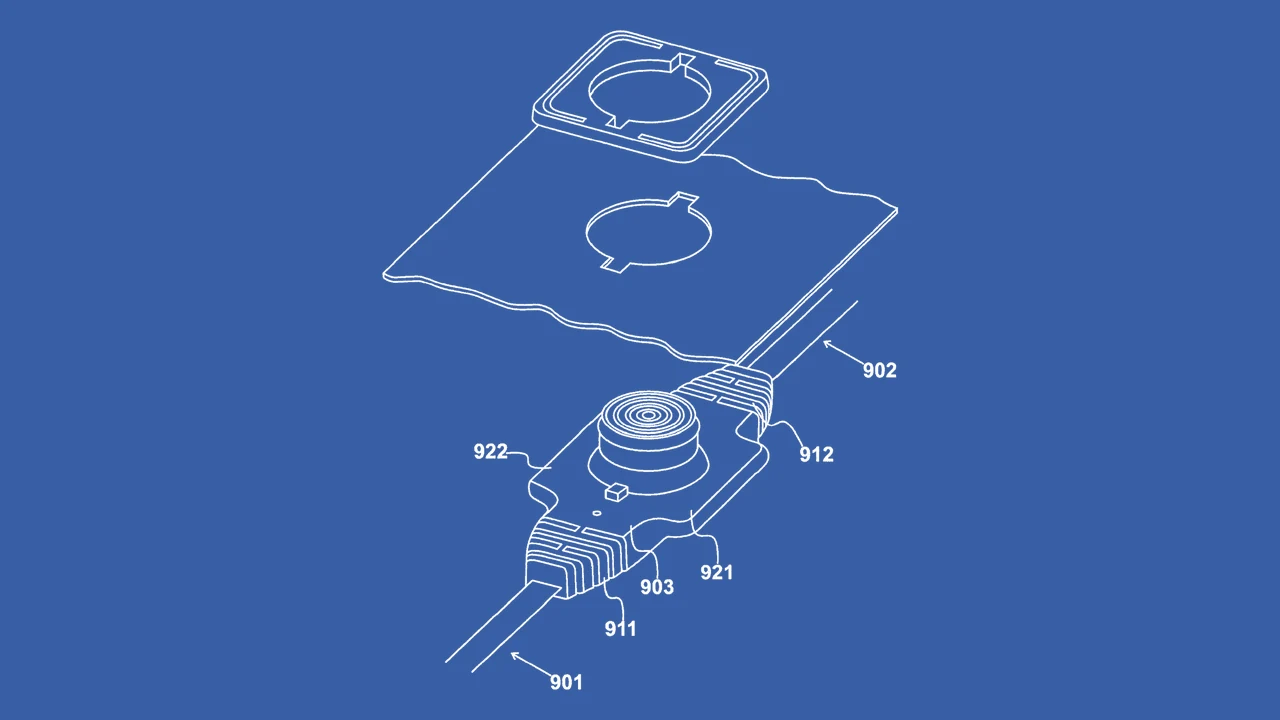
This patent tackles one of the defining challenges in wearable technology, giving a garment a robust, plug-and-play electrical interface that survives everyday wear and repeated washing. A rugged detachable connector passes through the fabric and joins a permanent internal wiring loom with integrated strain relief and side flanges stitched or bonded inside the garment to spread load across the material. The loom is built with textile manufacturing in mind, using either wash-resistant silicone ribbon cable or a sewable textile ribbon carrying the conductors, with edges that can be stitched along existing seams and coloured threads marking sewing positions, and connectors can be daisy-chained into a scalable in-garment network.
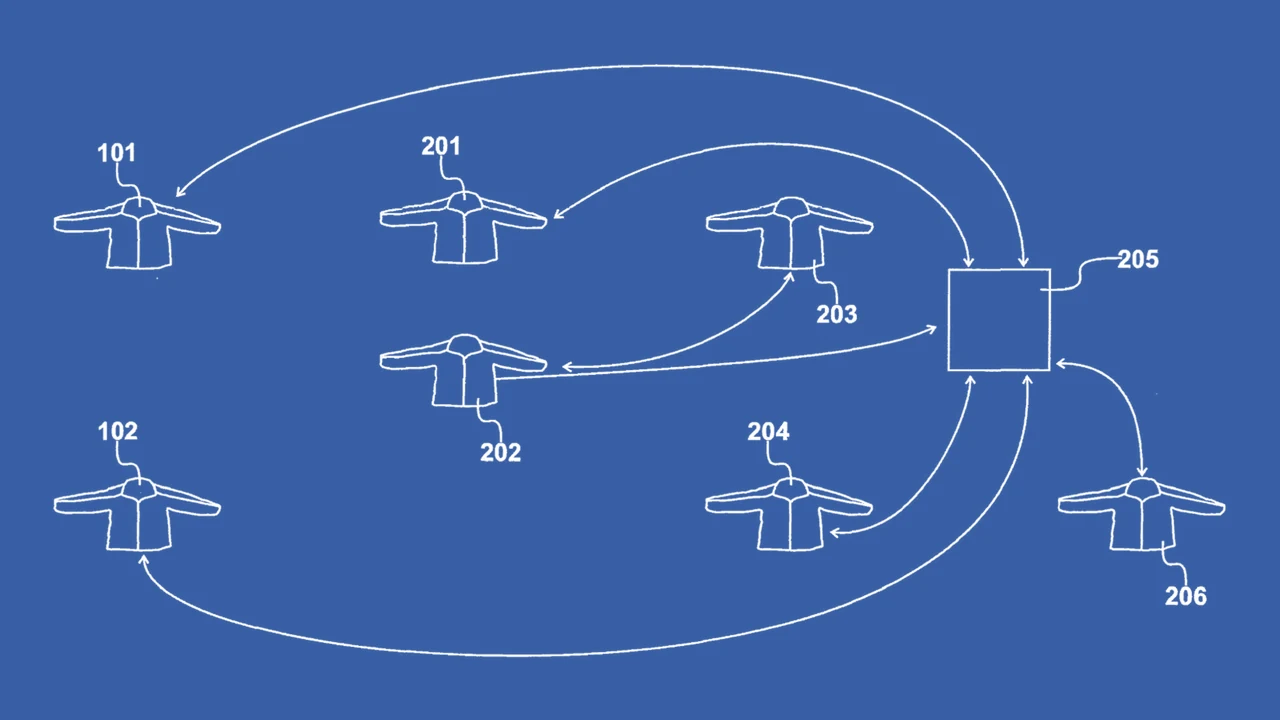
This invention brings connected safety electronics out onto the surface of the garment, giving supervisors in hazardous environments instant sight of their team’s status. A rugged communication unit sits upright in a windowed fabric pocket or detachable pouch, with its indicator lights glowing through a top window and its display ready to view with a simple tilt that releases a hook-and-loop fastening and snaps back on letting go. The pouch locks onto the jacket through a concentric electrical connector built into the garment, so the unit can read configuration data from the jacket itself, identify exactly which garment it is paired with and report that to the control station. A stitched lever-action release strip lets the pouch be removed quickly by hand without stressing the fabric. The result is a modular, networked workwear platform that links operatives, man-down alerts, hazard detectors and a central control station, with the same unit moving seamlessly between operational and supervisory roles.
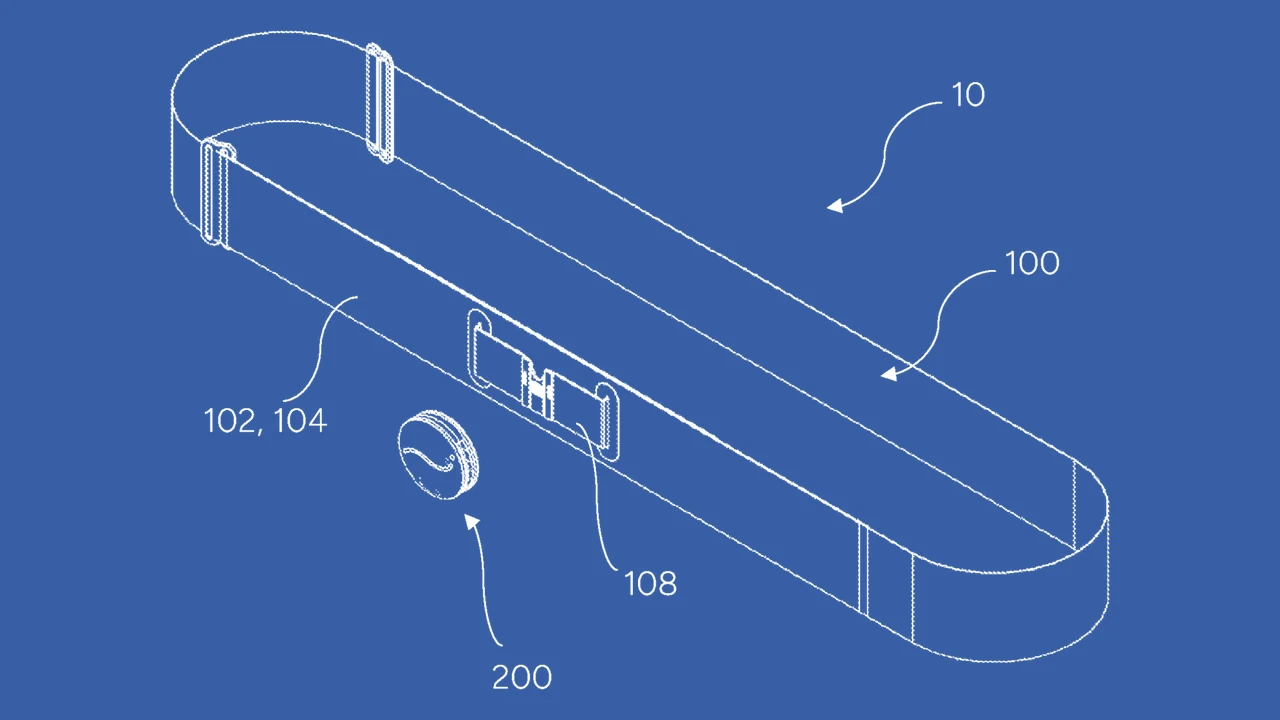
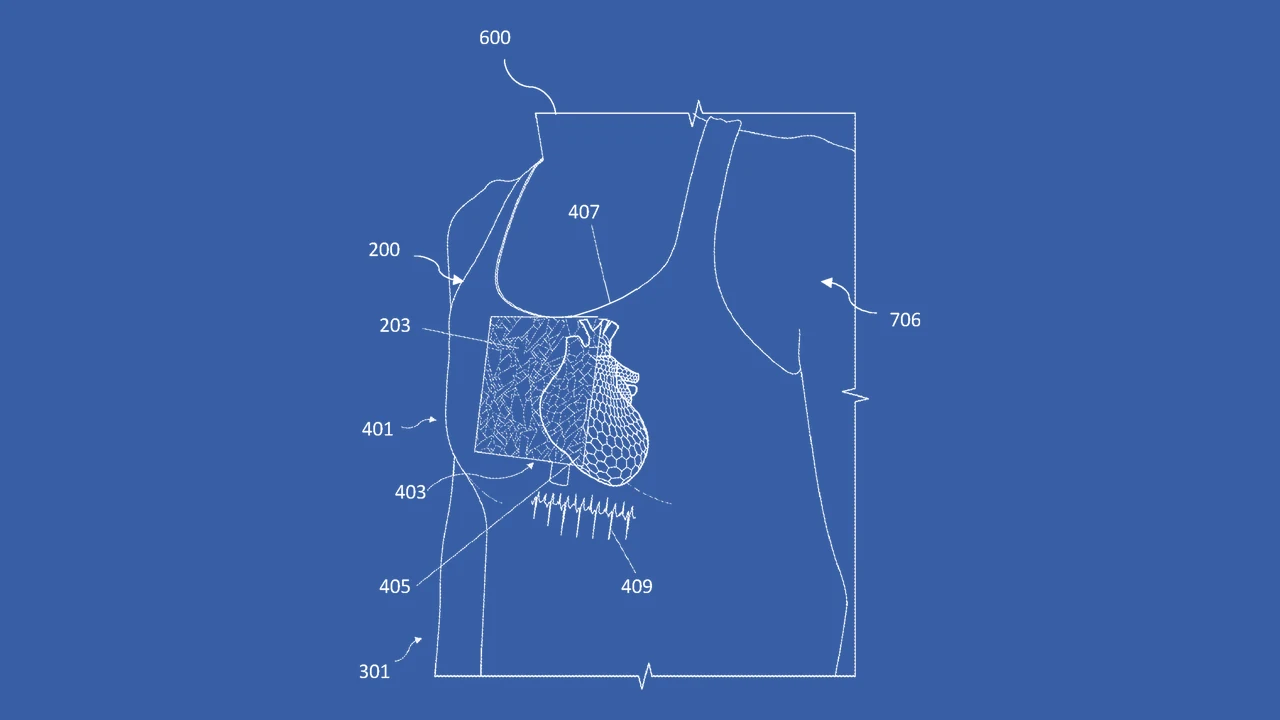
This invention turns any garment into a biosensing platform through a slim, slide-on clip and a retrofittable sensor band. Conductive strips pass through small reinforced slits in the fabric, forming skin-contact electrodes on the inside and a reinforced, insulated tab of terminals on the outside, so the band can be added to garments made with established manufacturing methods. The clip slides over the tab, where spring-loaded contacts with built-in redundancy pick up ECG and bioimpedance signals, while guide rails, a locating notch and a textured grip hold it firmly through vigorous exercise and keep the hardware away from the skin. The clip can also draw power from an energy harvester in the garment, completing a flexible, comfortable and scalable approach to everyday smart clothing.
Interfacing peripheral devices used in a hazardous environment
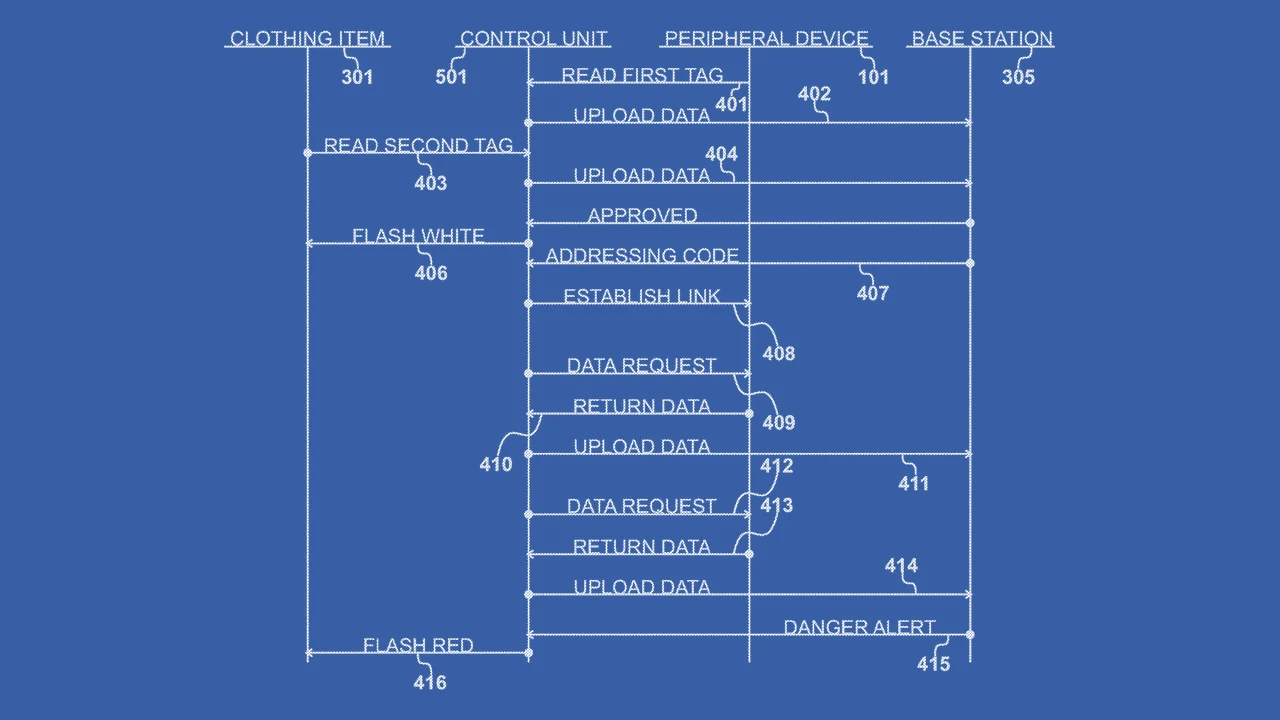
This invention turns a garment into a smart safety hub that brings everyday hazard monitors into a live, connected network. A worker simply knocks a gas detector or noise monitor against the control unit, which senses the tap, reads a passive NFC tag on the device and from then on listens only to that device’s broadcasts, ignoring the many others nearby on a busy site. The control unit plugs into a wiring loom in the jacket to drive light-emitting strips, and adds haptic, audible and headset alerts, fall detection and GPS tracking. A base station checks that the operative, garment, control unit and detectors form an approved combination before releasing access codes, then polls detectors every few minutes to turn end-of-shift data loggers into near real-time alarms shared across the team. It even picks up signals from standalone proximity-warning systems so the jacket lights up too, all without modifying or recertifying the original equipment.
This patent unlocks one of the most powerful advantages of smart clothing, the ability to share a pool of removable electronics modules across many biosensing garments while always knowing exactly whose data is whose. A user simply taps a phone against the module in the garment’s pocket, which wakes it from a low-power state and transmits its unique identifier, then scans a machine-readable code on the garment itself, and the two are linked automatically with no manual entry. The garment identifier can be printed, built into a logo or design, carried by an NFC or RFID tag, or formed as a hidden infrared-readable marker spread across a large area of the fabric, so it reads reliably at a distance while leaving the garment free for team names and sponsor branding. As the marker also serves as an augmented reality anchor, a coach, physiotherapist or broadcaster can point a camera at an athlete across the pitch and see live heart rate, training zone, hydration and injury-risk data overlaid on the moving image, turning e-textile garments into a scalable platform for team sport, workplace safety and healthcare monitoring.
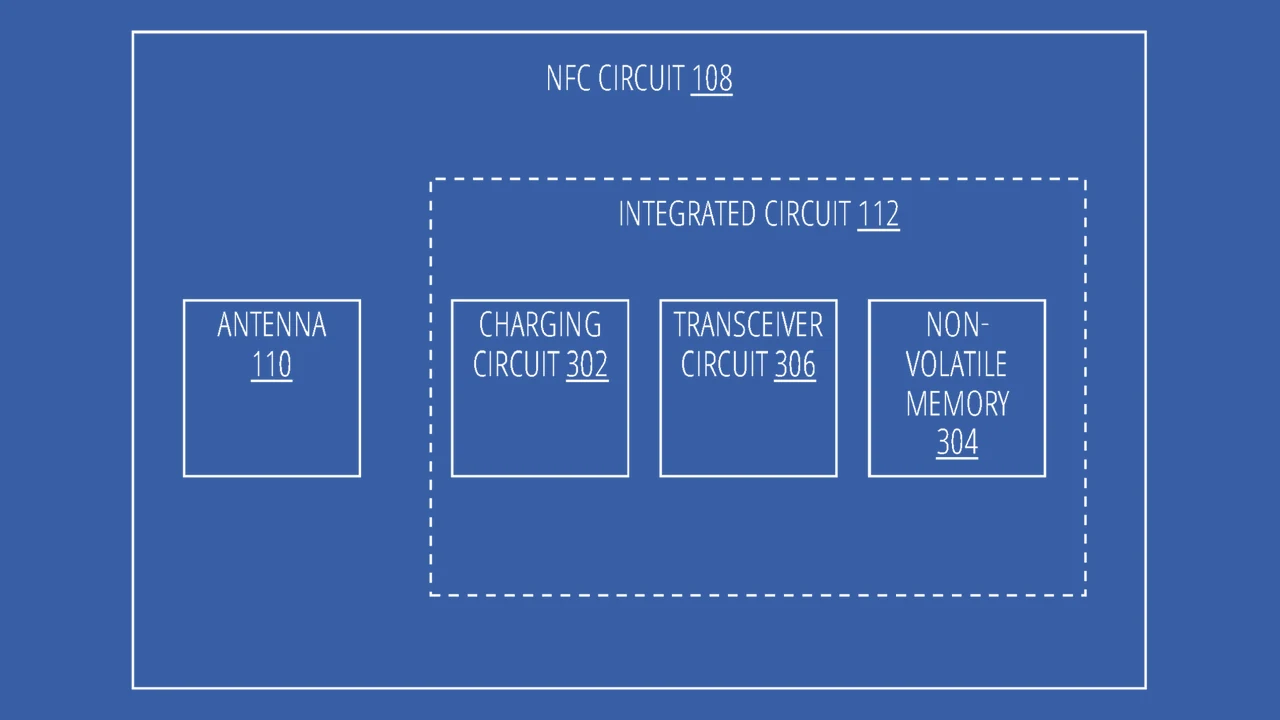
This invention sets out a lean, battery-free architecture for linking physical objects to rich digital content through near field communication. A passive NFC circuit, comprising a loop antenna, a charging circuit, a small programmable non-volatile memory and a transceiver, harvests all of its operating power from the inductive field of a nearby smartphone, so the host object needs no battery, port or onboard media storage. On a tap, the circuit returns compact interaction data, such as a unique identifier, which the phone uses to open the right app and securely download or stream photos, video and audio from a remote content server. As only a few bytes travel over the low data rate NFC link, the heavy content can live in the cloud and be updated or added to at any time. The tag can be adhered discreetly to a surface, embedded out of sight, or formed directly on a printed circuit board substrate with artwork printed over it, giving a low-cost, durable and power-free route to embedding connected experiences in everyday objects.
Method and system for verifying an activity metric
This invention uses the body itself as proof of effort, giving smart garments a powerful role in trustworthy fitness rewards. Data from sensors woven into the garment, including ECG, heart rate variability, bioimpedance breathing, skin temperature and capacitance, confirms that the module is genuinely being worn and that the wearer’s physiology matches the distance, steps or training intensity claimed. It can even recognise the individual from their biosignals, and cross-checks location, sweat-driven changes in signal quality and environmental readings, so shaken pedometers, spoofed GPS and signal generators are all caught. The result is a secure foundation for move-to-earn platforms, virtual races, insurance incentives and emissions-saving rewards for active travel, all built on garment-based biosensing.
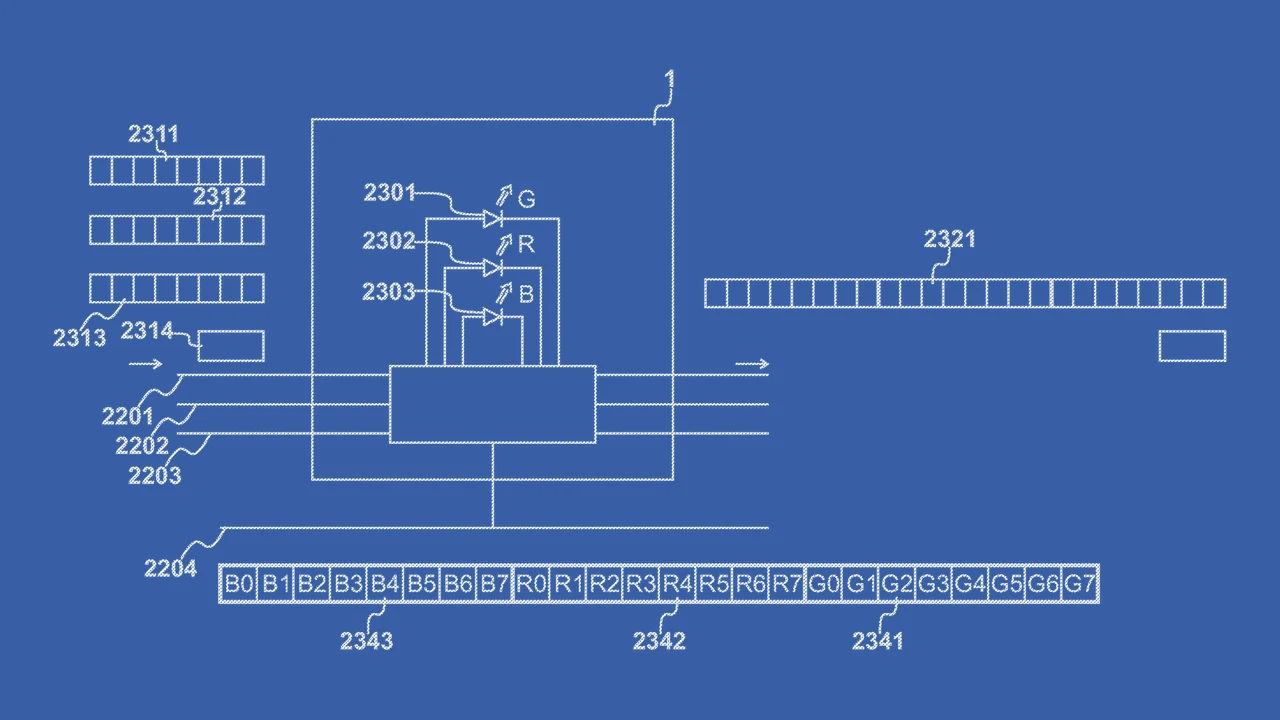
This invention gives the garment its own memory, so the clothing itself tells the electronics how to behave. A wiring loom of addressable multicolour LED strips, with an ambient light sensor, terminates in a compact interface circuit or plug holding a small memory chip, over-moulded to survive washing at 60°C. When any standard control unit is plugged in, it reads the garment’s configuration data and instantly drives the lights in the right colours, brightness and flash patterns for that wearer and industry, such as amber and white on the railway, dimmed output offshore, red flashing for a local alarm and blue when a colleague nearby needs help. The same chip records test results from both the loom factory and the garment factory and logs a full twelve-hour shift of operational data, creating a traceable quality and safety record. Combined with a modular harness built from sub-assemblies, where only one part carries the electronics, the design keeps manufacture simple and stock lean while letting interchangeable control units move freely between garments at every shift change.
Electronic device, a wearable article incorporating an electronic device and a system comprising an electronic device and a wearable article
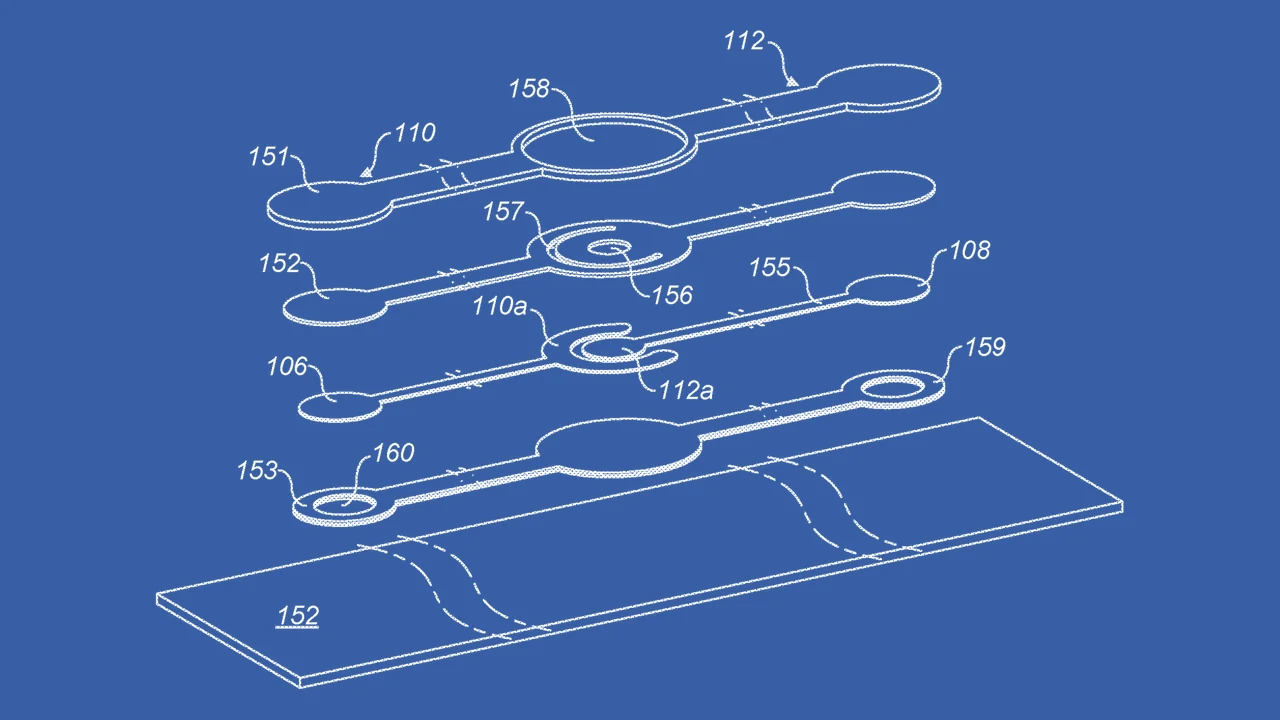
This invention delivers an elegantly simple, one-handed way to clip the electronics onto a biosensing garment. Skin-facing electrodes and stretchable wavy tracks, printed as a silver-ink conductive transfer, terminate in a neat concentric interface of rings and roundels on the garment surface. A circular module snaps into place with paired magnets, and spring contacts flex through its base to meet those rings, so the connection holds even as the module rotates. A soft compression-foam locating ring guides the module home, damps movement to protect the printed conductors and helps keep water out, avoiding bulky plastic hardware in the garment. The result is a comfortable, washable smart garment that captures ECG and bioimpedance signals, with a wipe-clean module that lifts off in seconds for charging and laundering.
No patents or designs match. Clear the search or filters to see them all.
Have an invention worth protecting?
We help innovators work out what's genuinely patentable, prepare invention disclosures and work with patent attorneys to protect it properly. Tell us where you are, from a sketch to a working prototype.